
From performing tasks to running the business: SenseTime Smart Retail defines SenseMart OS as the physical operating system for retail
Connecting heterogeneous embodiments, the retail brain, real-world scenario data and store operations to close the final mile of commercializing embodied intelligence.
During the 2026 World Artificial Intelligence Conference (WAIC), SenseTime Smart Retail presented SenseMart OS, the physical operating system for retail, under SenseTime Group's overarching theme, "Advancing Together with Models, Moving Forward into the New."
It connects heterogeneous embodiments, the retail brain, real-world scenario data and store operations, bringing model- and robot-based capabilities into real retail environments. SenseTime Smart Retail has therefore defined its role clearly: positioned between upstream embodiment capabilities and downstream retail operations, it builds on the mechanical structures, motion control and end-effector capabilities of different embodiments, adding retail intelligence, task coordination, transaction fulfillment and operational systems. This enables deployable, commercially viable and replicable embodied retail solutions for operators, franchisees, brands, venue operators and companies upgrading retail facilities.
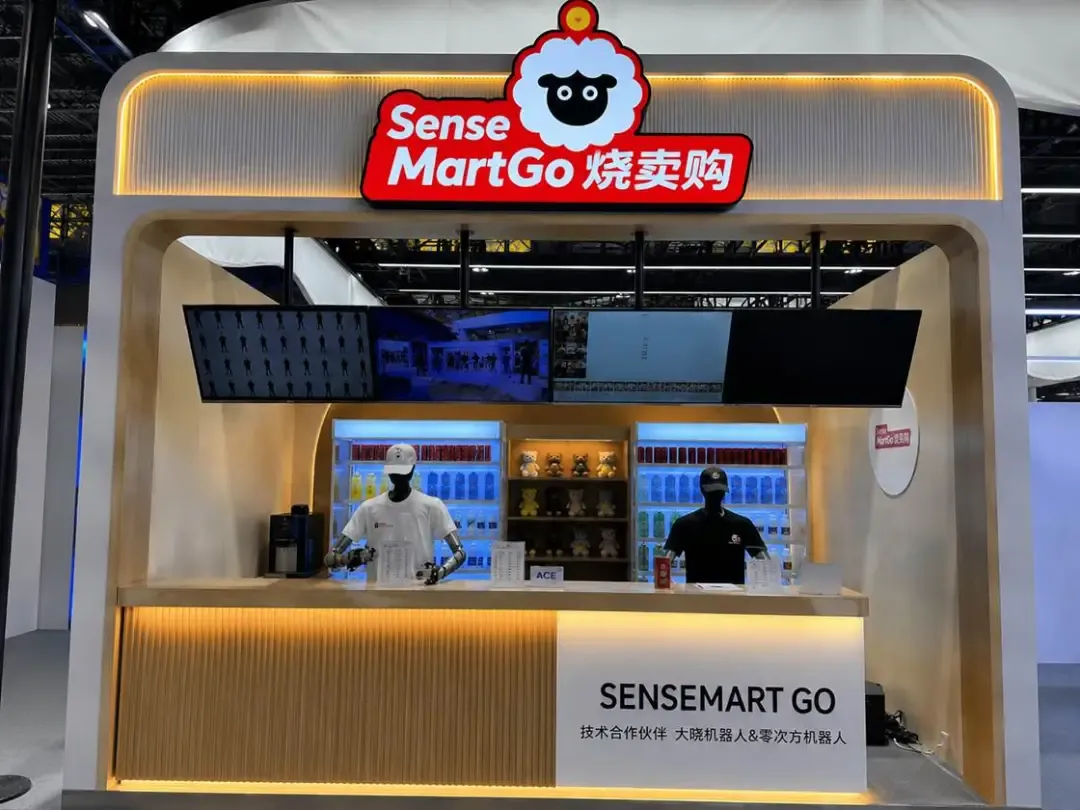
WAIC Shanghai World Expo Exhibition & Convention Center H1-B807, SenseTime Smart Retail SenseMart GO
One OS to equip robots with the retail capabilities needed to open and run a store
When a robot completes a pick-and-place task in the lab, it has solved only one action in a retail workflow. Once inside a store, it must also identify products, understand customers, check inventory, make recommendations, control equipment, accept payments, fulfill orders, and handle stockouts, customer complaints and equipment anomalies. SenseMart OS integrates these retail capabilities into a unified system, providing the business foundation for robots operating in stores. Embodiment companies can continue to leverage their strengths in mechanical structures, motion control and end-effectors. SenseTime Smart Retail builds on these capabilities with retail-scene perception, multimodal interaction, task planning, heterogeneous coordination, transaction fulfillment, operational analytics and end-to-end process learning from data—organizing isolated action capabilities into system-level capabilities that can continuously fulfill tasks, run operations and evolve.
As a key component of SenseMart OS, the "retail brain" coordinates four types of capabilities: perception identifies products, the environment and customer needs; execution handles picking, preparation, delivery and replenishment; interaction enables multilingual communication, recommendations and service; and analytics supports assortment planning, inventory management, anomaly detection and operational strategy. These four capabilities operate around the same order, linking on-site actions with back-office operations in a single chain. SenseMart OS therefore occupies a clear category: it is an operating system that connects the physical world of retail.
Heterogeneous embodiment coordination enables different robots to share one retail task system
Different robots excel at different actions. SenseMart OS uses standardized robot integration and unified task orchestration to bring heterogeneous devices—including wheeled robotic arms, grippers, dexterous hands and humanoid robots—into a single order workflow. Once a customer places an order, the system breaks it down into picking, preparation, delivery and handoff tasks based on each device's capabilities, allowing multiple robots to work together to fulfill a single order. At WAIC, the coordinated work of "Xiaomai" and "Damai" demonstrated precisely this system capability. Smart Retail has now signed cooperation agreements with ACE Robotics, Lingci Fang and other robot manufacturers. These partnerships have progressed to robot integration, scenario adaptation and deployment in retail settings, further validating SenseMart OS's ability to support diverse robot capabilities and convert them into commercial applications.
For operators, franchisees, companies transitioning to smart lockers, brands and venue operators, entering robotic retail does not require building an equipment portfolio, product catalog, store workflows, payment interfaces, customer interactions and on-site operations from scratch. SenseMart OS adapts and combines robots based on their respective capabilities, while providing reusable retail task templates, standardized interfaces, remote takeover and operational tools. Downstream customers receive more than a single robotic device: they gain a complete solution spanning deployment, order intake and ongoing operations. At the same time, upstream robot capabilities can be validated and iterated through real-world orders.
Fast fulfillment, better experiences: turning technical advantages into every order
Ultimately, system capabilities must be measured by fulfillment outcomes. SenseMart OS can currently complete an order in as little as 15 seconds. Its multimodal large language model supports seamless switching between Chinese and English and can be extended to support additional languages. Customers can ask questions naturally, receive recommendations and complete purchases, taking robot interaction beyond attracting attention to driving transaction conversion. For stores, reliable fulfillment, remote operations and exception handling collectively reduce the pressure on on-site staff.
Smart Retail has deployed its solution in dozens of stores across different cities, locations and operating periods. Standardized hardware and software interfaces, task templates and operational tools enable new stores to reuse system capabilities that have already been validated. As the number of stores grows, data and experience in product recognition, interaction, execution and operating strategies accumulate more rapidly, improving both deployment efficiency and operational stability at new locations.
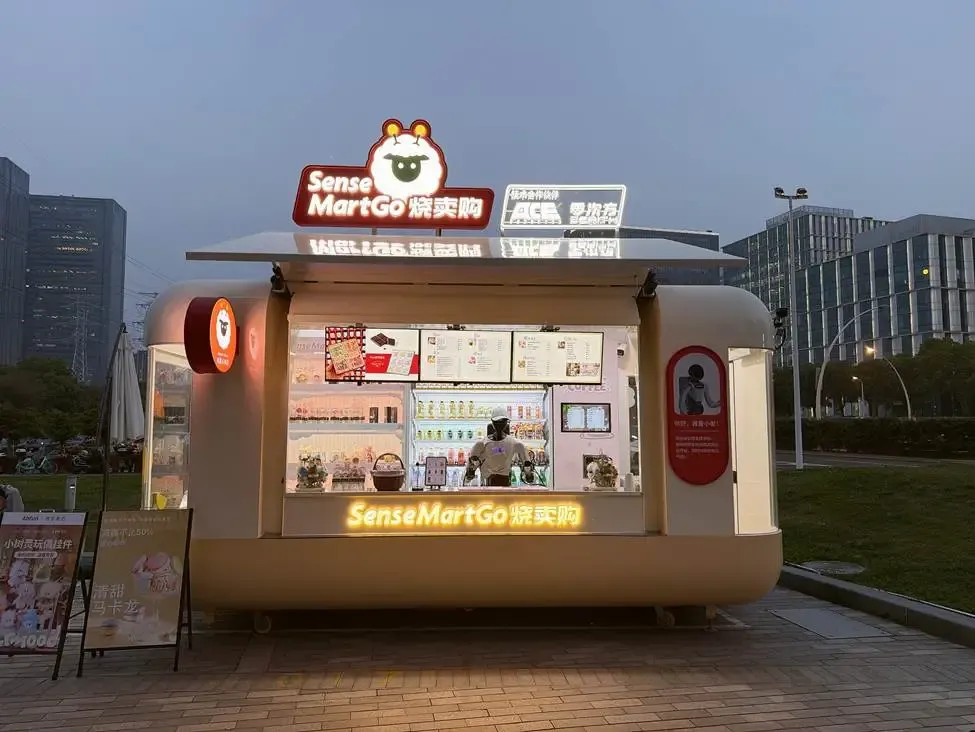
The first SenseMart Go robotic store: Xinzhou Store
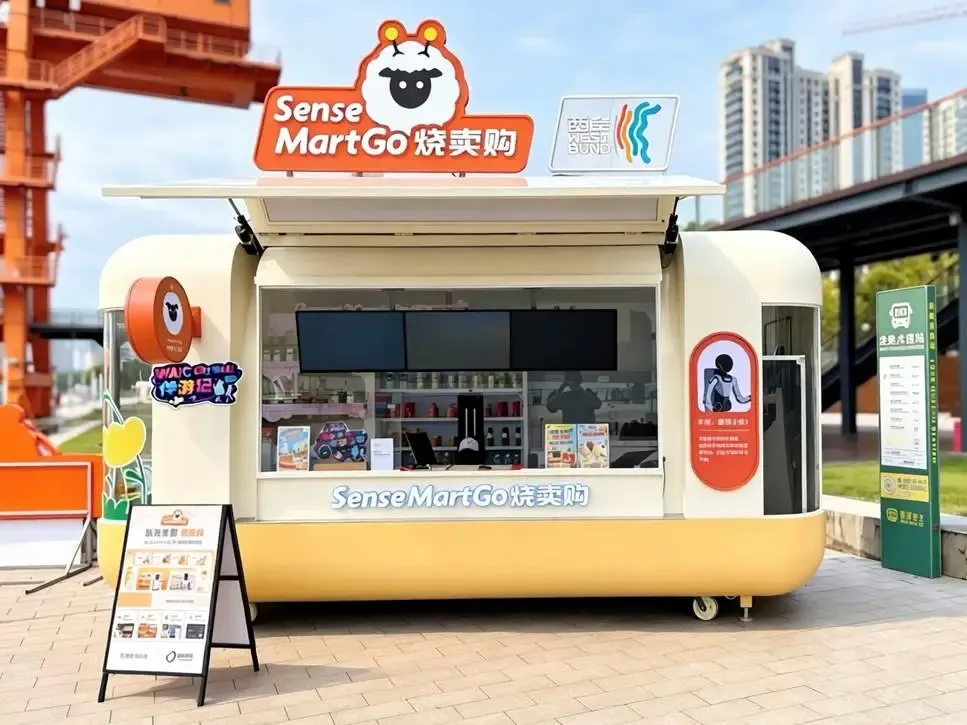
Xuhui Riverside Store No. 2, newly opened to customers
Why Smart Retail: a closed-loop data system and a viable operating model
Smart Retail's differentiation comes from running its technology and operations over the long term within a single system. The system has accumulated 2D and 3D modeling assets for 300,000 types of products and continues to build a dataset of human-object interaction (HOI) data involving people and products. Its product-recognition operations process 1.5 million to 2 million orders every day. Environmental data, customer interactions, robot actions, transaction fulfillment, failed tasks and remote takeover records from stores all flow back into the system, including interactions that do not result in transactions. These real-world, end-to-end process data continuously feed into models and operating strategies, creating a closed-loop learning cycle of store opening, operations, data feedback, capability improvement and replication at new stores.
Store operations have also entered a stage where the economics can be clearly calculated. Smart Retail controls costs through hardware procurement at scale, reduced staffing, remote operations and systematic product selection and replenishment. The profitability model for an individual store has been validated in operations, with a payback period of approximately 12 months. The rollout of dozens of stores has turned rapid replication from a plan into an active business process. Robust technology, customer willingness to interact, reliable order fulfillment and viable store economics together give Smart Retail the confidence to define a physical OS for retail.
From WAIC, bringing more robots into retail
WAIC brings together models, embodiments, and industry partners. Smart Retail provides the platform infrastructure that connects upstream embodiment capabilities with downstream retail demand. SenseMart OS integrates different embodiments at the upstream end, adapting them to specific scenarios and providing unified task scheduling. At the downstream end, it connects operators, franchisees, smart-locker transformation companies, brands, and site owners, delivering robotic store solutions that can be deployed, operated, and replicated. The value of each solution is ultimately measured by operational results, including deployment time, order fulfillment, customer interaction, per-store costs, and payback period.
When perception, execution, interaction, and analysis work together continuously in real stores, robots acquire the comprehensive capabilities required for retail operations. Along this chain, SenseMart OS serves as a retail physical operating system: upstream, it integrates heterogeneous embodiments and provides the technical and operational capabilities required by retail scenarios; downstream, it delivers intelligent solutions that can be deployed, operated, and replicated. As stores continue to operate, each new location can also build on real-world scenario data and operational experience accumulated by previous stores.
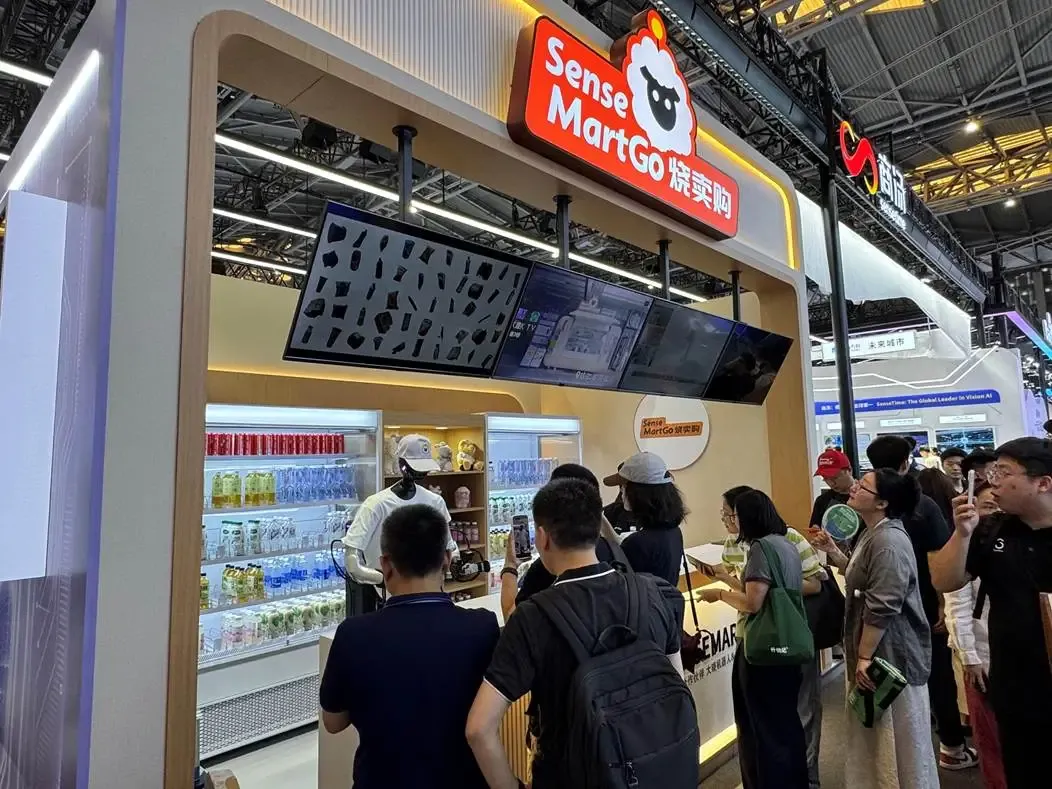
Crowded exhibition booths and more than 3,000 orders secured in four days
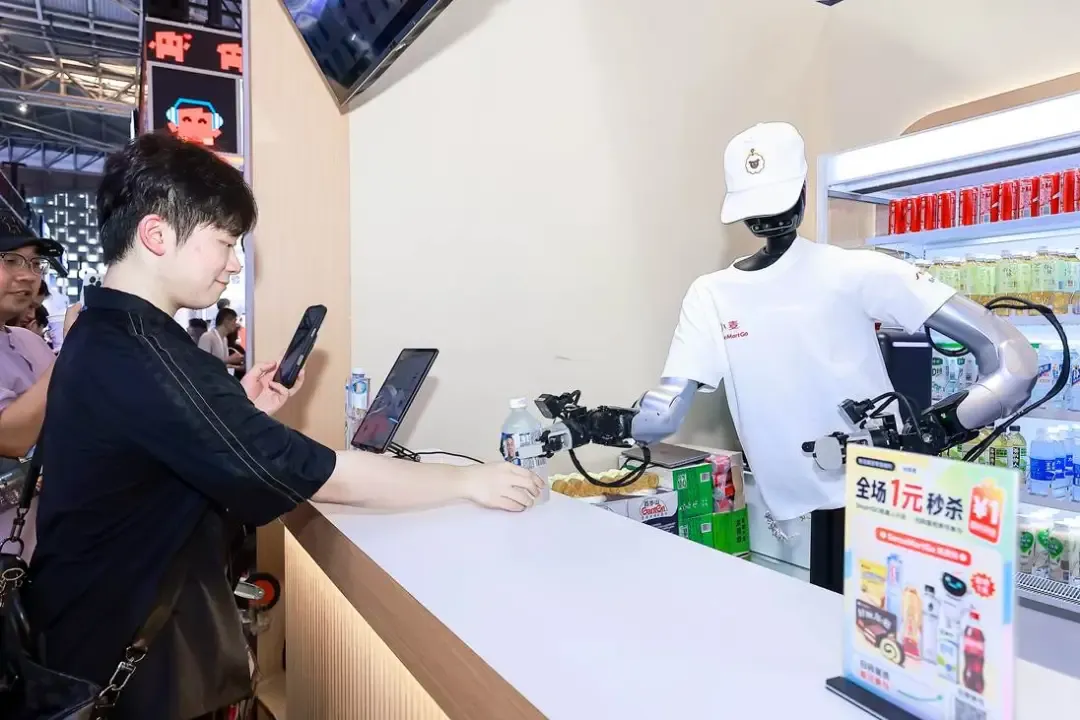
The robot store managers' smooth and reliable on-site fulfillment capabilities drew repeated praise from customers.
About Shanghai SenseTime Smart Retail Information Technology Co., Ltd.
SenseTime Smart Retail is an ecosystem company of SenseTime focused on the smart retail sector. Its core product is SenseMart OS, a retail physical operating system. SenseMart OS integrates heterogeneous embodiments upstream and adds retail intelligence, while providing operators, franchisees, brands, and site owners downstream with embodied retail solutions that can be deployed, operated, and replicated. Powered by SenseTime's proprietary AI multimodal foundation models, Smart Retail has accumulated visual assets for more than 300,000 SKUs. Its SenseMart Go robot store has been deployed and is operating at multiple locations in Shanghai, making it the first embodied retail brand in China to establish a profitable single-store business model.